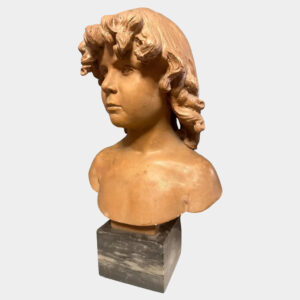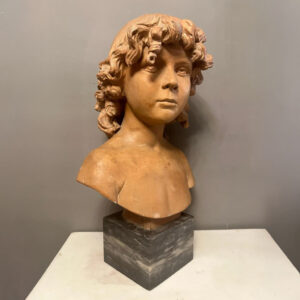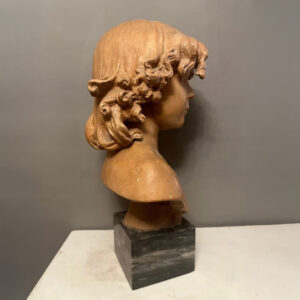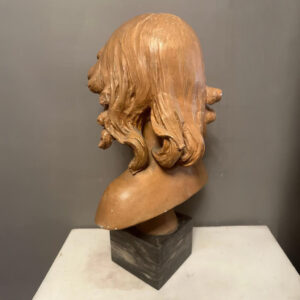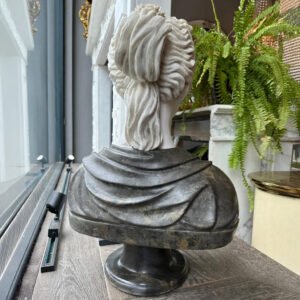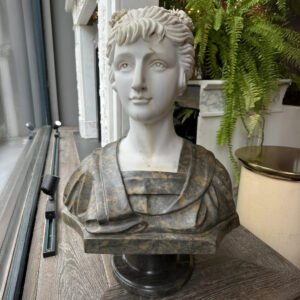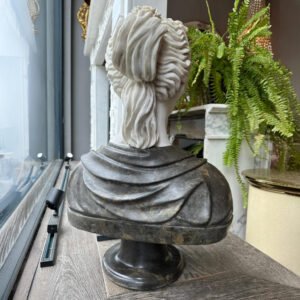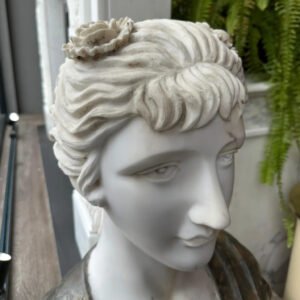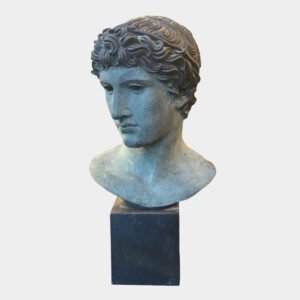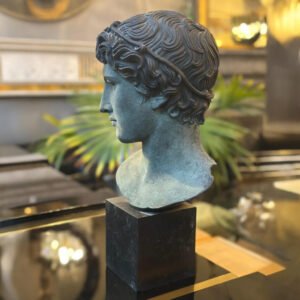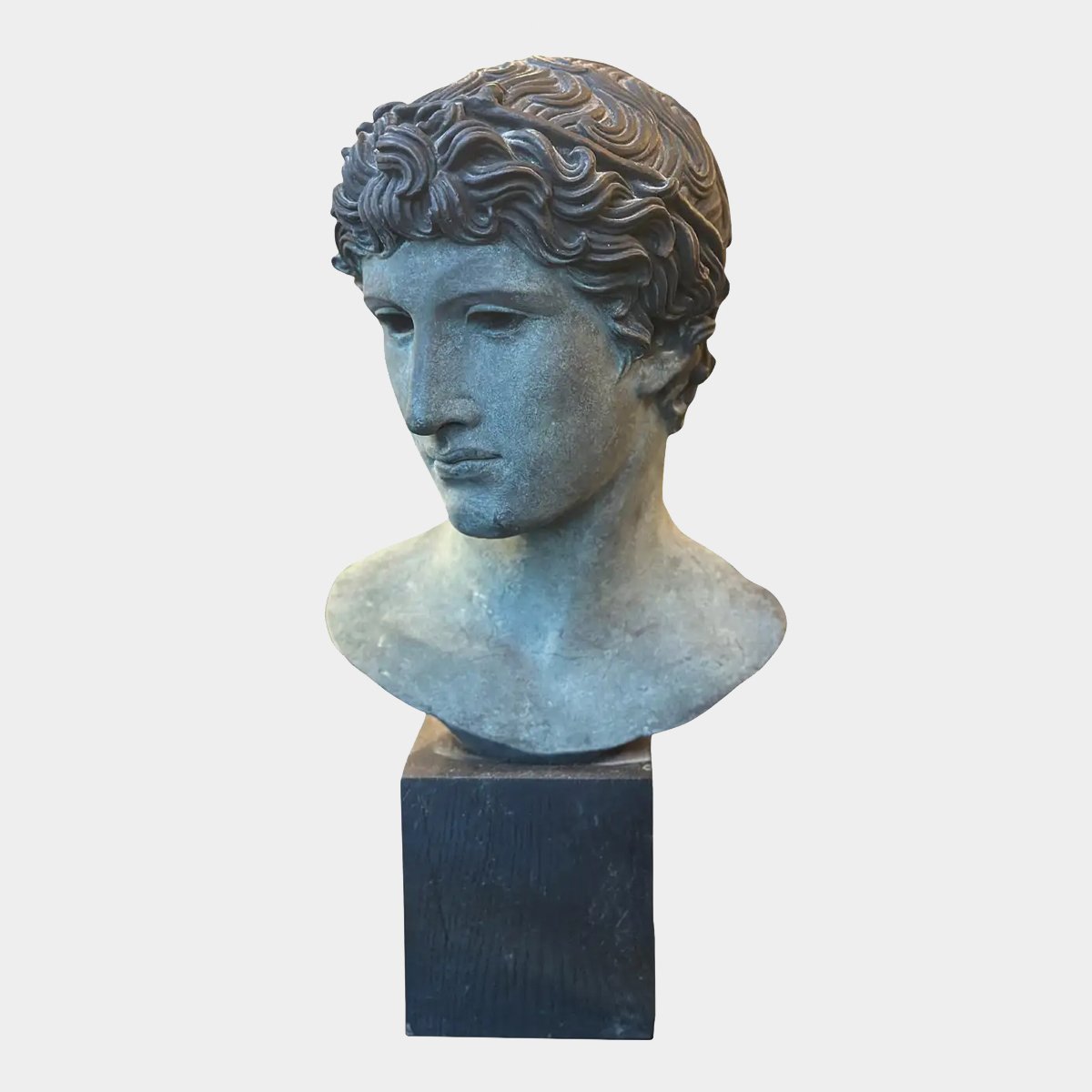


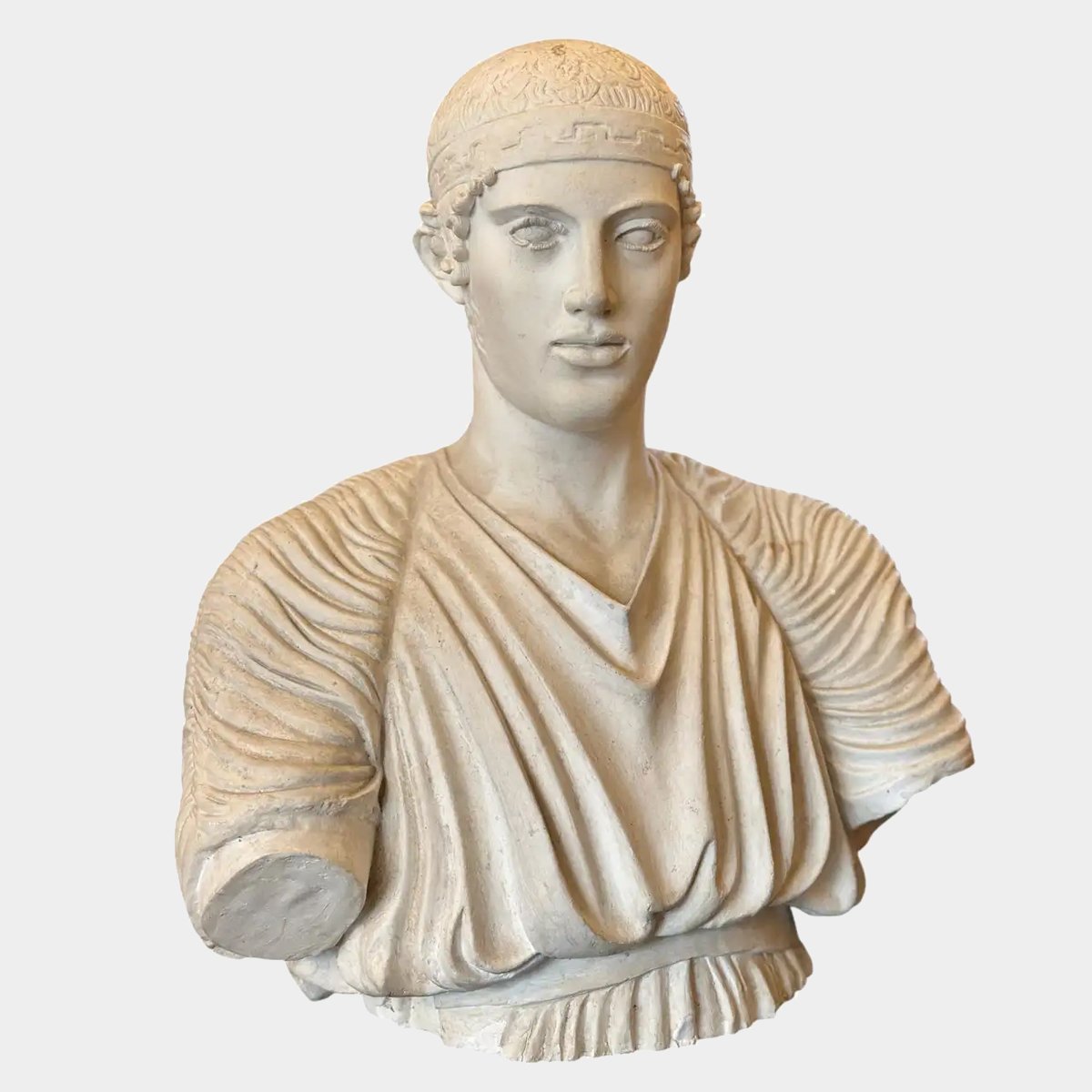
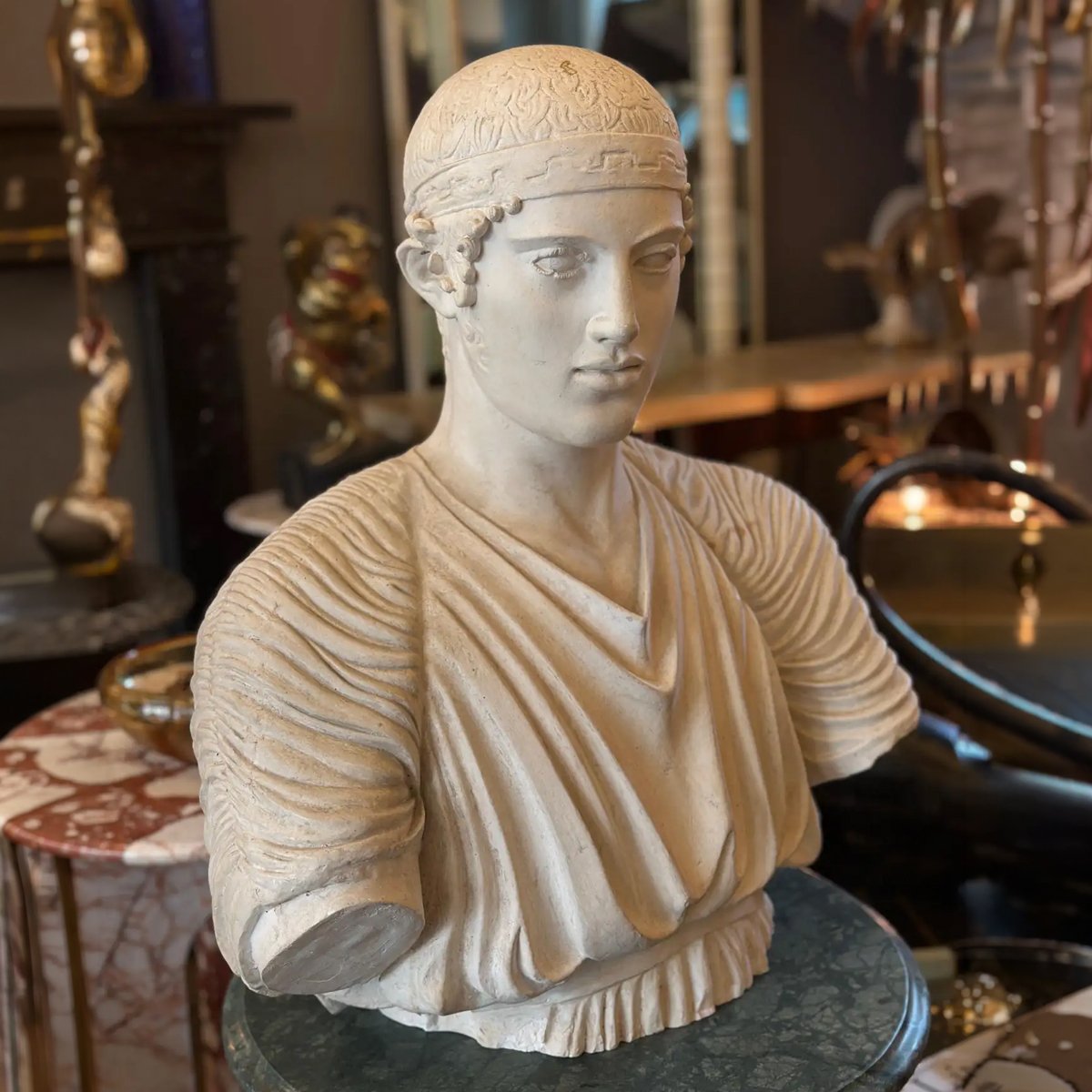
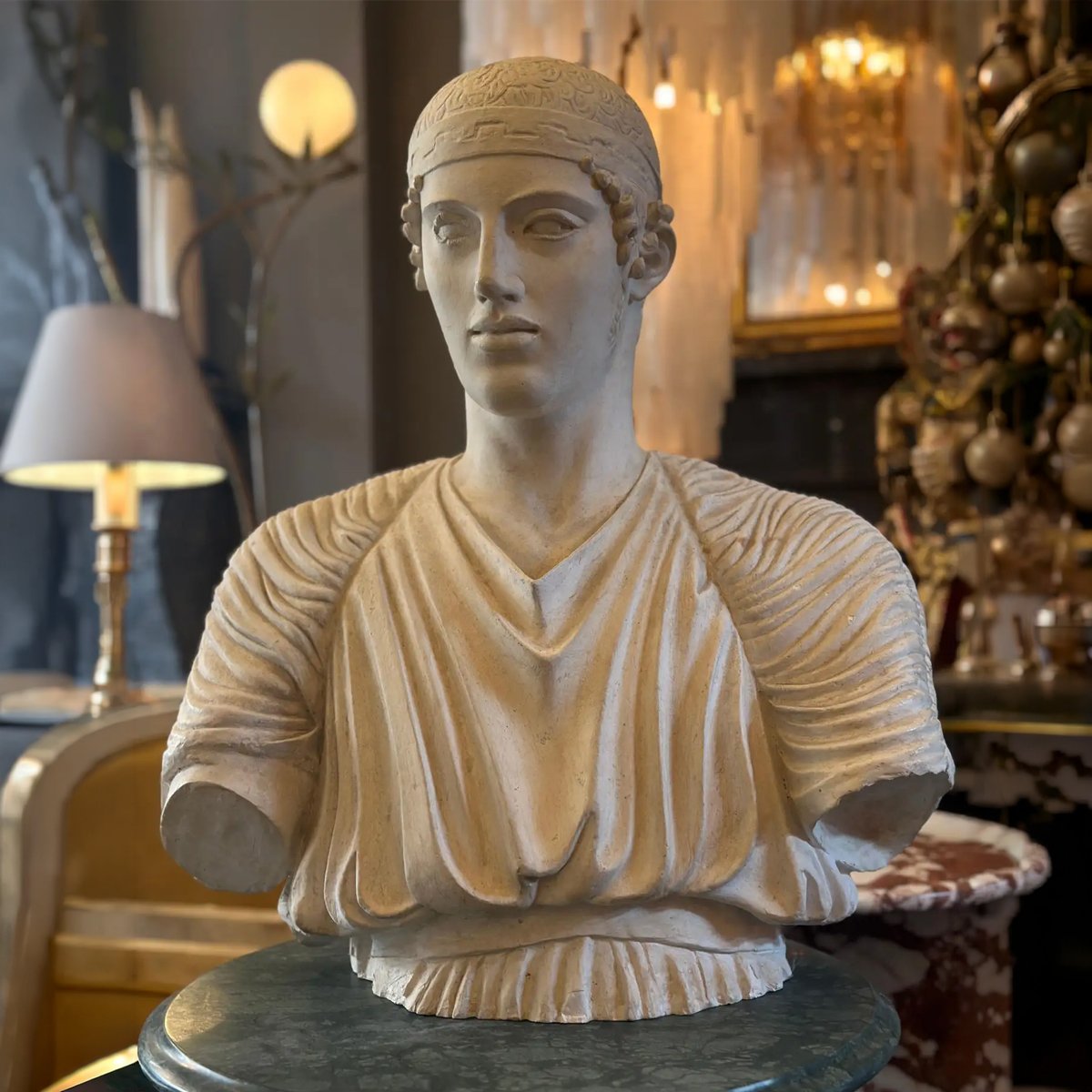
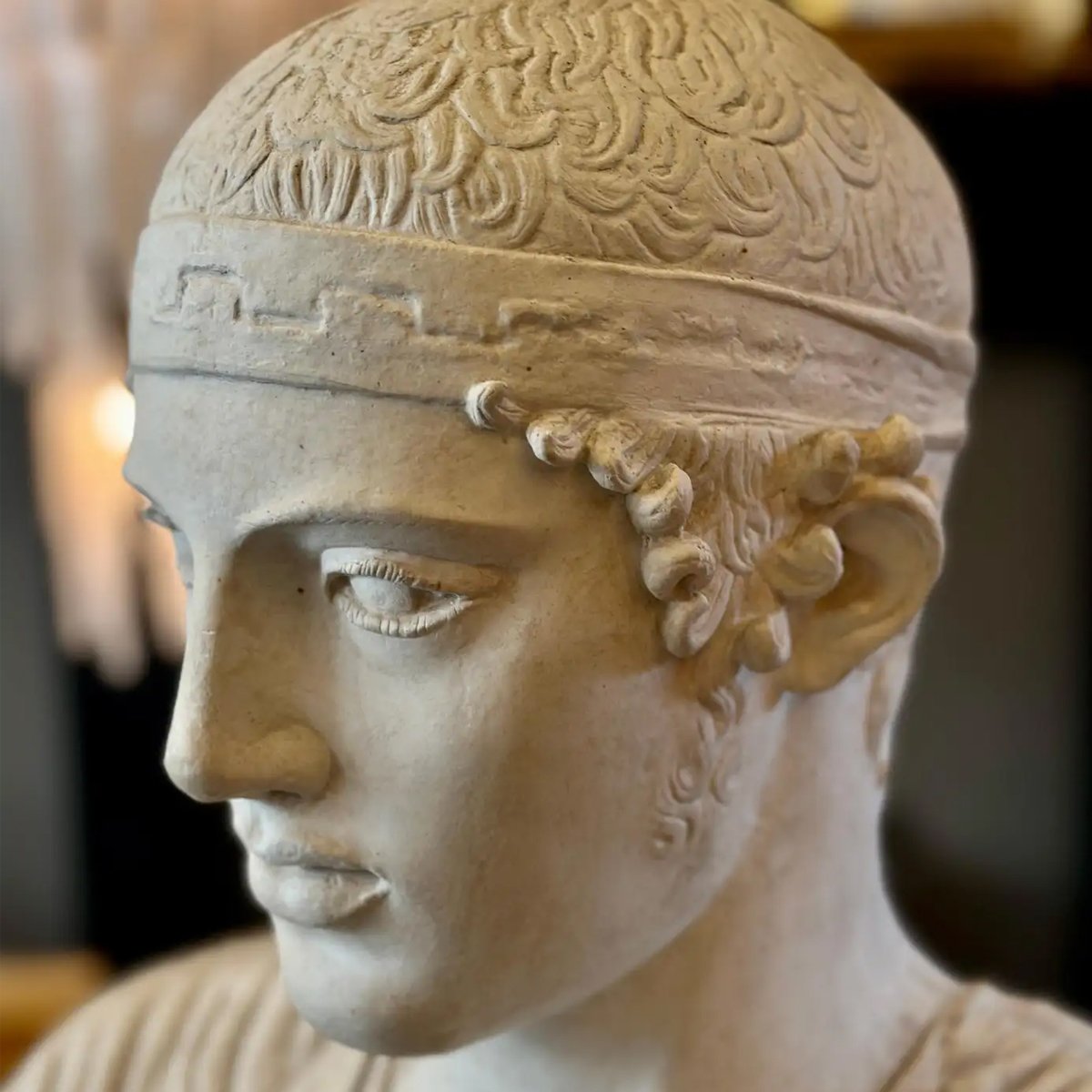
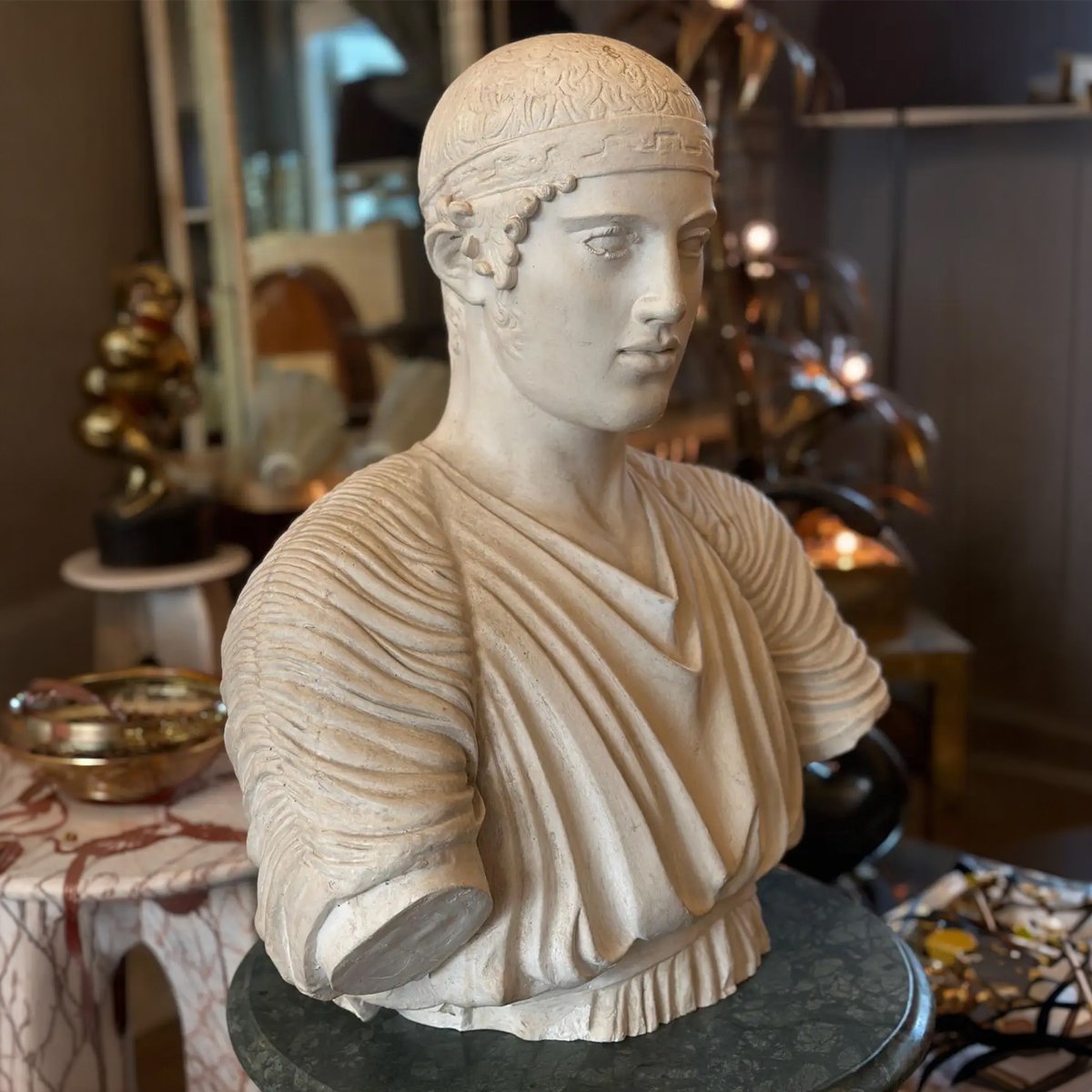
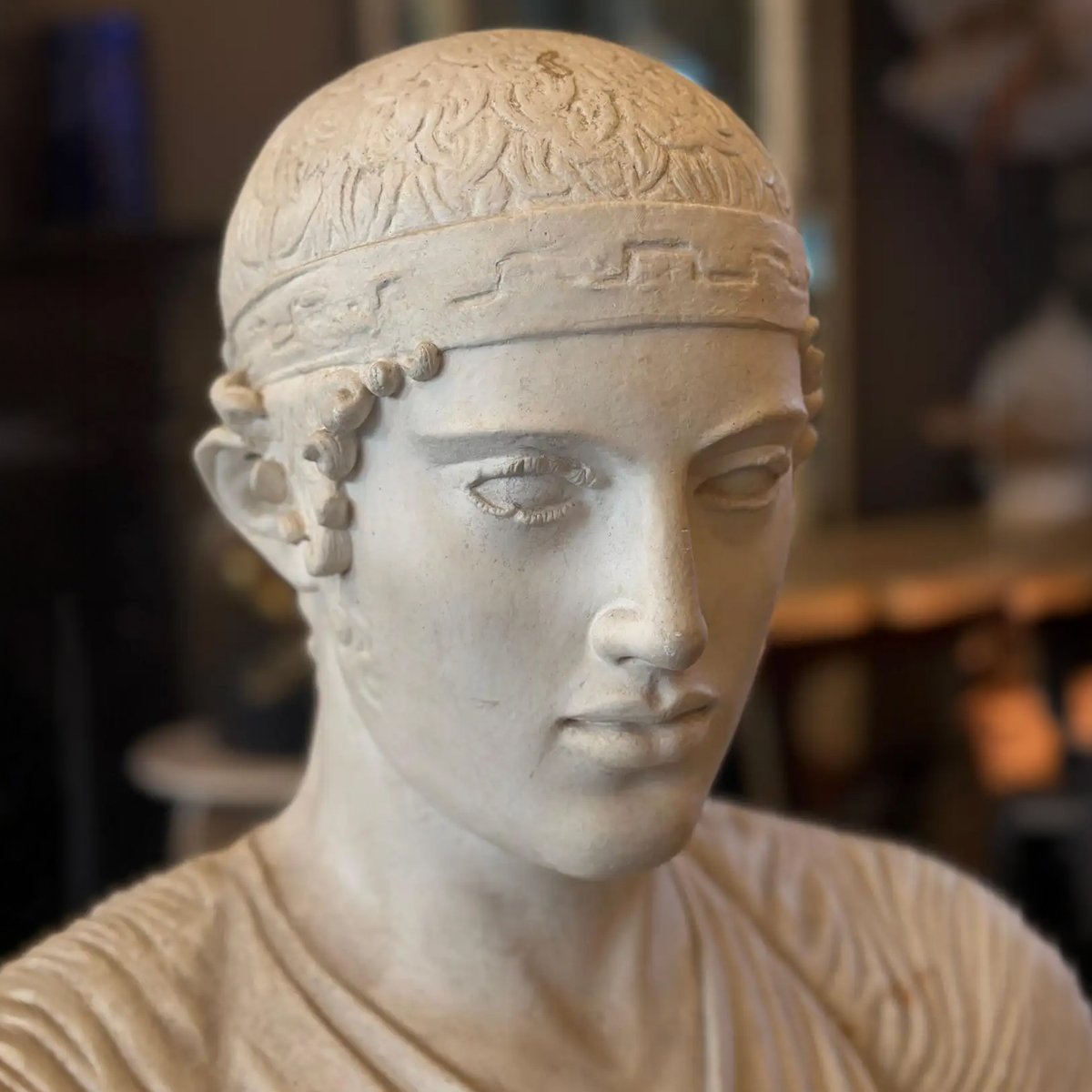
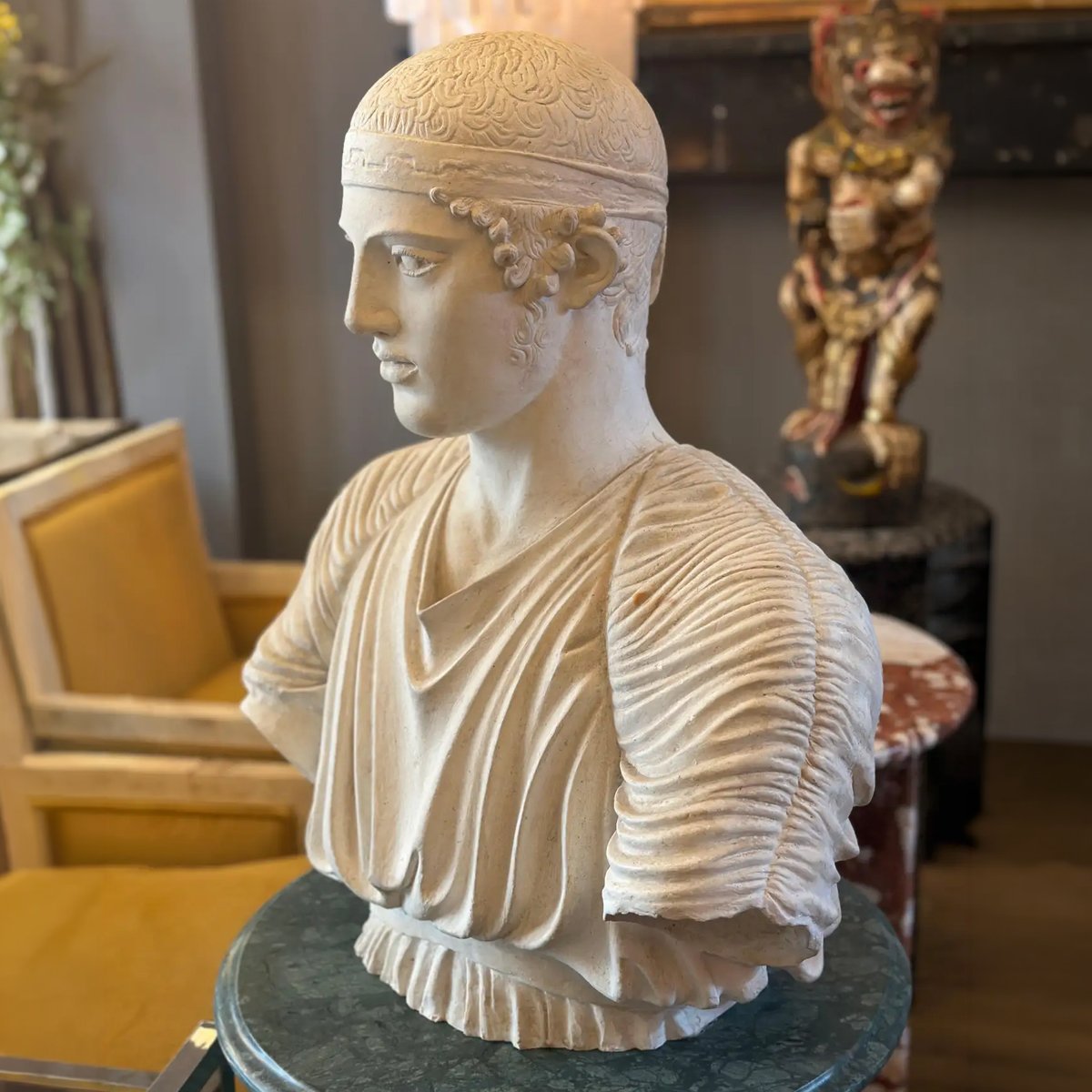
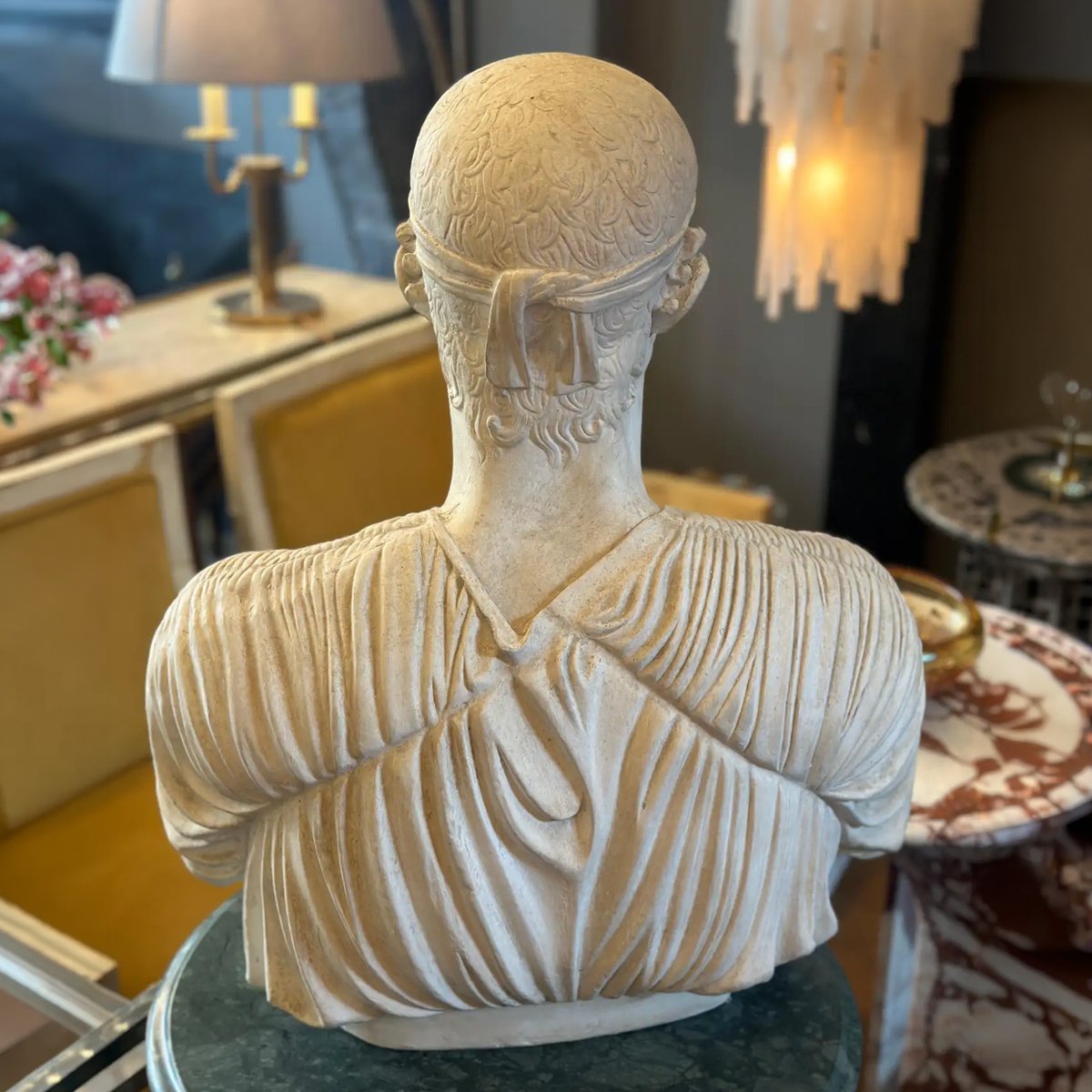
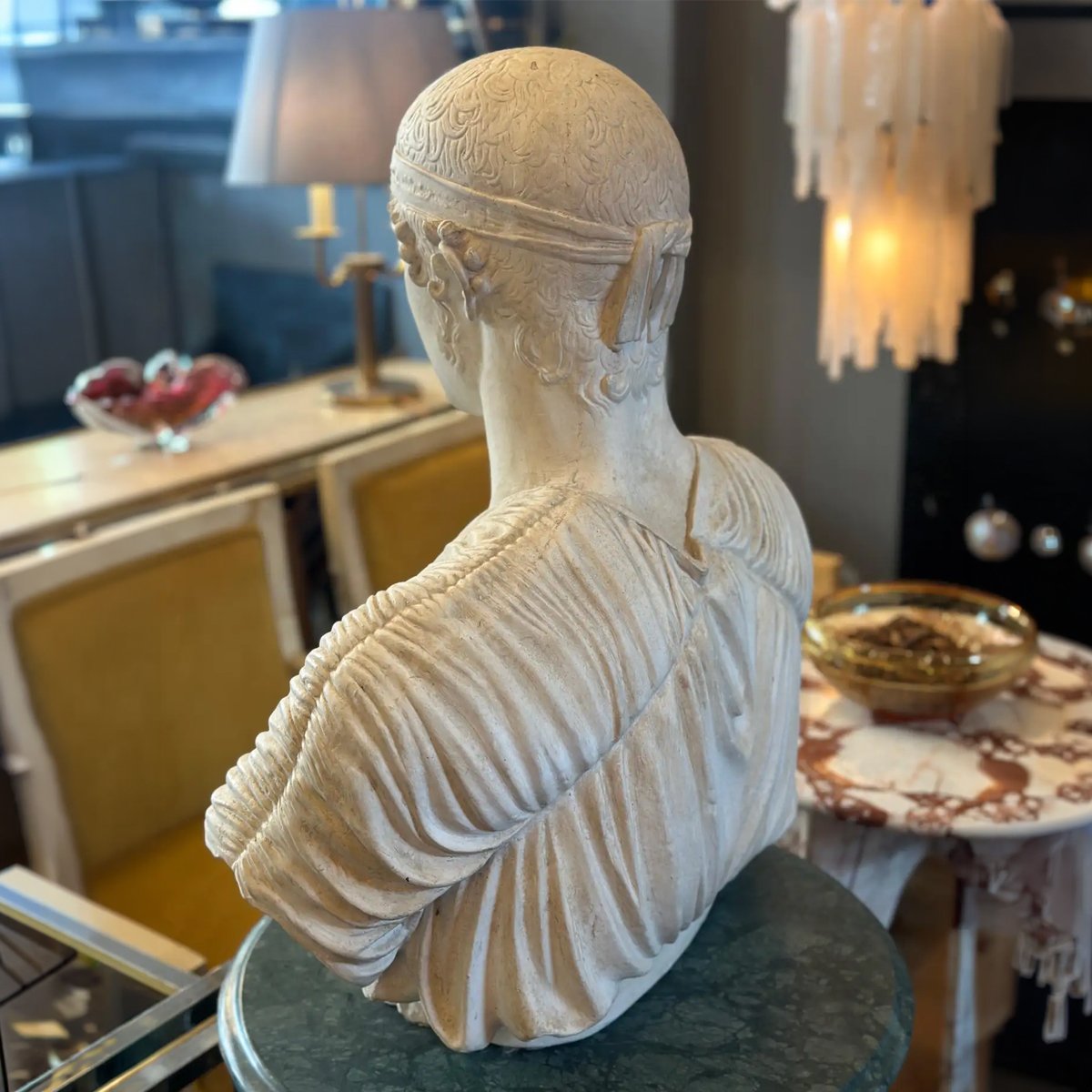
An Antique Plaster Bust Of The Charioteer Of Delphi
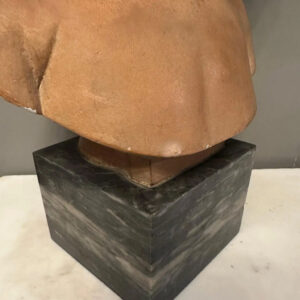
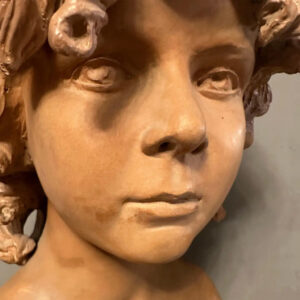
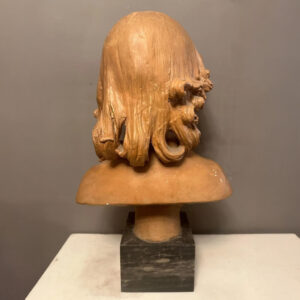
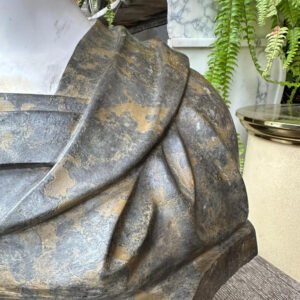
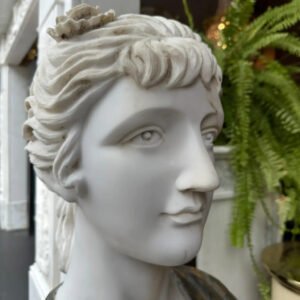
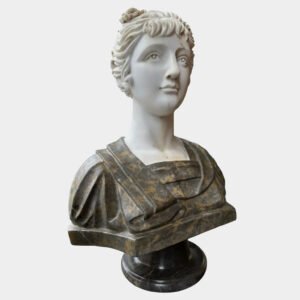
After the the statue from antiquity, a plaster bust from the 19th century
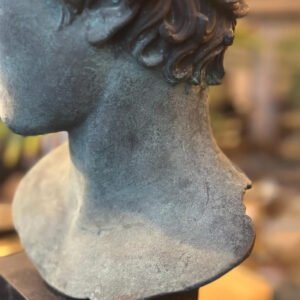
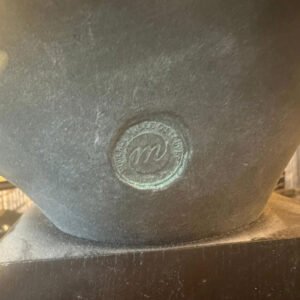
images are a true reflection of condition
The Charioteer of Delphi, also known as Heniokhos is an ancient Greek bronze statue dating to around 470 BC. The original standing 1.8 meters tall, the life-size figure of a chariot driver was originally part of a larger sculptural group that included a chariot, horses, and child attendants, fragments of which were also uncovered among the ruins. The work was dedicated at the Sanctuary of Apollo at Delphi, one of the most important religious sites of the Greek world, to commemorate a victory in the panhellenic Pythian Games, which featured both athletic and equestrian competitions
The figure represents a young noble, or ephebe, wearing a characteristic sleeved tunic. He is shown after the race has ended, during the victory parade, wearing the champion’s headband. His head is turned slightly to the left. Unlike many other artworks from the sanctuary that were looted or destroyed, it survived because it had been buried in the debris of the great earthquake of 373 BC.
The statue was discovered in 1896 during excavations at Delphi. Today it is considered one of the finest surviving examples of the Severe style, dominant in the Greek world between 490 and 450 BC. Its naturalistic rendering of the human form, combined with a restrained, dignified expression, illustrates the transition from the stylized Archaic kouros figures to the more realistic representations of the Classical period. The statue is housed today in the Delphi Archaeological Museum